
Build a Stethoscope
Overview
A stethoscope is a medical instrument used by healthcare professionals to listen to sounds inside the body, primarily the heart, lungs, and intestines.
It consists of a small disc-shaped resonator called a chest piece, which is placed against the patient’s skin, and connected to earpieces via flexible tubing. The chest piece often has two sides:
Diaphragm for high-frequency sounds (like heartbeats)
Bell for low-frequency sounds (like certain lung or vascular noises).
By amplifying internal sounds, the stethoscope helps doctors assess health, detect abnormalities, and monitor conditions such as irregular heartbeats, respiratory issues, or blood flow problems.
Did you know?
The stethoscope was invented in 1816 by a French doctor named René Laennec. He felt awkward putting his ear directly on a patient’s chest, so he rolled up paper to listen; and that’s how the first stethoscope was born.
The earpieces curve toward the nose because sound travels better when they point toward the ear canal. If they’re backward, the sound gets muffled!
Stethoscopes don’t just check hearts, they also let doctors listen to lungs and even tummy gurgles.
Design Challenge:
Explore how sound travels through a stethoscope and how doctors listen to your body.
Listen to your chest before and after exercise. What changes?
Try using a metal funnel. Does it sound different?
Put the funnel on a door or table — can you hear tapping on the other side?
Materials needed:
2 feet (about 60 cm) of flexible plastic tubing (clear aquarium tubing or similar)
1 small plastic funnel
1 balloon
Scissors
Tape or rubber bands
Build Instructions:
Cut the balloon in half and keep the round part. Stretch it tightly over the wide end of the funnel. Secure with a rubber band or tape to keep it in place.
Push one end of the plastic tubing onto the narrow end of the funnel. Make sure it’s snug — this creates your “sound pickup.”
Hold the other end of the tubing up to your ear.
Place the funnel (balloon side down) against someone’s chest, your own, or even a tabletop. Listen closely — can you hear a heartbeat or vibrations?
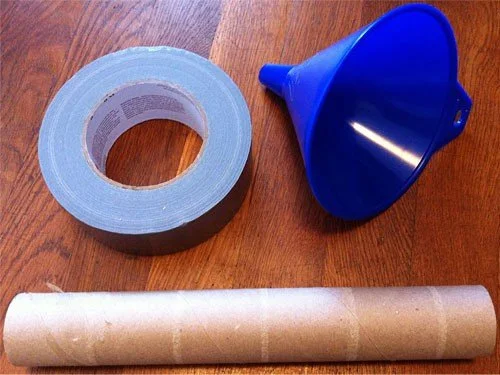
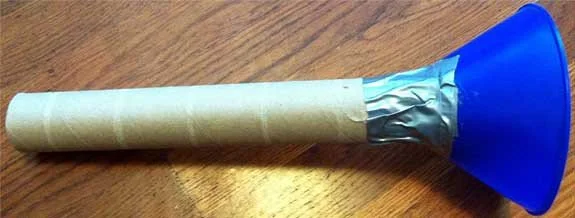
Build instructions provided by Science Buddies
Submit Your STEM Kit Build Feedback:
After you complete your STEM Kit Build, complete the feedback survey to be entered into a quarterly raffle!