
How Does a 3D Printer Turn a Digital File Into a Solid Object?
The term 3D printing often pops up in tech blogs, maker spaces, and sci-fi movies. It might seem like magic—watching a solid plastic toy or a mechanical gear materialize out of thin air. Beyond the high-tech fascination, 3D printing is a straightforward manufacturing method that brings digital ideas into the physical world.
3D printing, or additive manufacturing, helps creators build three-dimensional solid objects from a digital file. These objects include everything from custom phone cases and medical prosthetics to rocket engine parts. The technology has become a vital tool in STEAM education because it allows students to prototype ideas quickly, safely, and affordably.
At the center of 3D printing is the concept of "slicing." Instead of carving an object out of a large block of material—the way a traditional sculptor works—a 3D printer does the exact opposite. It builds the object from the ground up, stacking thin, horizontal layers on top of one another.
How 3D Printing Works
Every 3D print begins as a digital idea. Designers use Computer-Aided Design (CAD) software to create a 3D blueprint on a computer. Once the digital model is ready, it is sent to a specialized program called a "slicer."
The slicer acts as the translator between the computer and the machine. It cuts the digital 3D model into thousands of flat, 2D horizontal layers. It also generates "G-code," which is a list of exact geometric instructions telling the printer where to move, how fast to travel, and how much material to release.
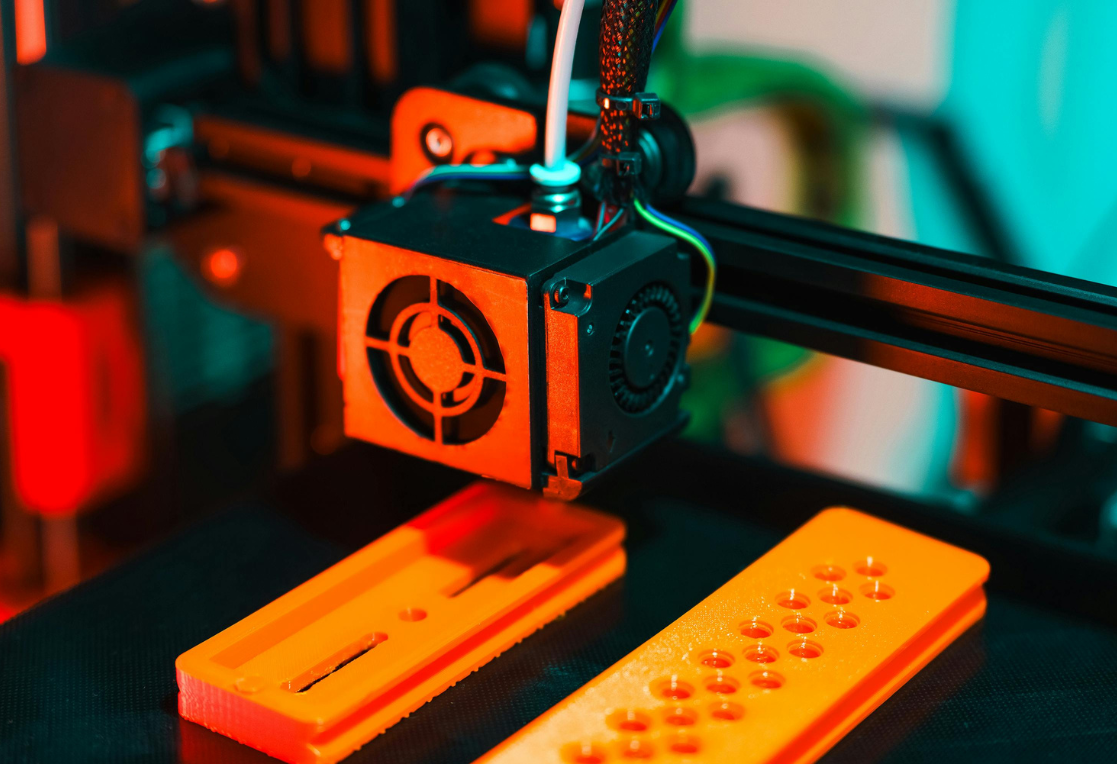
During printing, the machine reads this code and heats its nozzle. In common Fused Deposition Modeling (FDM) printers, a plastic filament is melted and pushed through this nozzle. The printer moves precisely across a build platform, laying down the first layer. As the plastic hits the surface, it cools and hardens almost instantly. The platform then drops slightly, and the nozzle draws the next layer directly on top. This repetitive stacking continues until the digital file becomes a tangible object.
Why 3D Printing Matters
3D printing has transformed medicine, aerospace, and education. Doctors use it to print custom prosthetics at a fraction of traditional costs, while aerospace engineers create lightweight, intricate parts that save fuel.
In STEAM classrooms, 3D printing brings abstract concepts to life. A geography student can hold a tactile topographic map, while a biology student can examine a scaled model of a human cell. It democratizes manufacturing, allowing anyone with a computer to become an inventor.
Limitations of 3D Printing
Although 3D printing is highly versatile, it has limits. The process can be slow; a complex object can take hours or even days to finish.
Material choices can also be restrictive. While we can print with plastics, metals, and ceramics, each requires specialized, often expensive machines. Furthermore, 3D-printed parts can have structural weaknesses along their horizontal layer lines, making them prone to splitting under heavy stress.
Looking Ahead
Engineers continue to improve 3D printing techniques. Future advancements include "bioprinting," where scientists use living cells as "ink" to grow transplantable human organs. Researchers are also developing faster print speeds and sustainable, biodegradable materials to reduce plastic waste.
3D printing may sound like futuristic wizardry, but its core idea is simple: by stacking one layer at a time, we can turn digital imagination into physical reality.
To learn more about STEAM Ahead, visit us at www.westeamahead.org